
A student learns to request help. An adult becomes more confident using a new work routine. A skill that once required support becomes more independent. These changes raise a shared scientific question: how does experience change what we do?
ABA and neuroscience study related aspects of learning. Applied Behavior Analysis examines how behavior changes in relation to the environment. Neuroscience investigates the nervous system and the biological processes involved in those changes.
Understanding this connection helps professionals discuss learning more precisely, connect research across disciplines, and evaluate claims about behavior and the brain.
How Are ABA and Neuroscience Connected?
Behavior occurs through the activity of a living organism interacting with its environment. Learning therefore has both behavioral and biological dimensions.
A behavior analyst might investigate whether a teaching procedure increases independent requests for help. A neuroscientist might investigate neural activity or changes in connections between neurons during learning. These questions examine different aspects of the same broader process.
The connection is strongest when each field contributes evidence suited to the question being asked. Behavioral observations describe changes in performance; biological measurements investigate the mechanisms involved.
Different Levels of Analysis
| Area | Main focus | Example question |
|---|---|---|
| Applied Behavior Analysis | Relations between behavior and environmental conditions, with an emphasis on meaningful outcomes. | Does changing the teaching procedure increase independent task completion? |
| Neuroscience | The structure and function of the nervous system, including mechanisms of learning and memory. | What changes in neural activity or connectivity accompany learning? |
Connecting these levels requires careful research. Observing a new skill does not, by itself, reveal which neural connections changed. Likewise, observing a neural response does not automatically explain how to teach a useful skill in everyday life.
What Is Neuroplasticity?
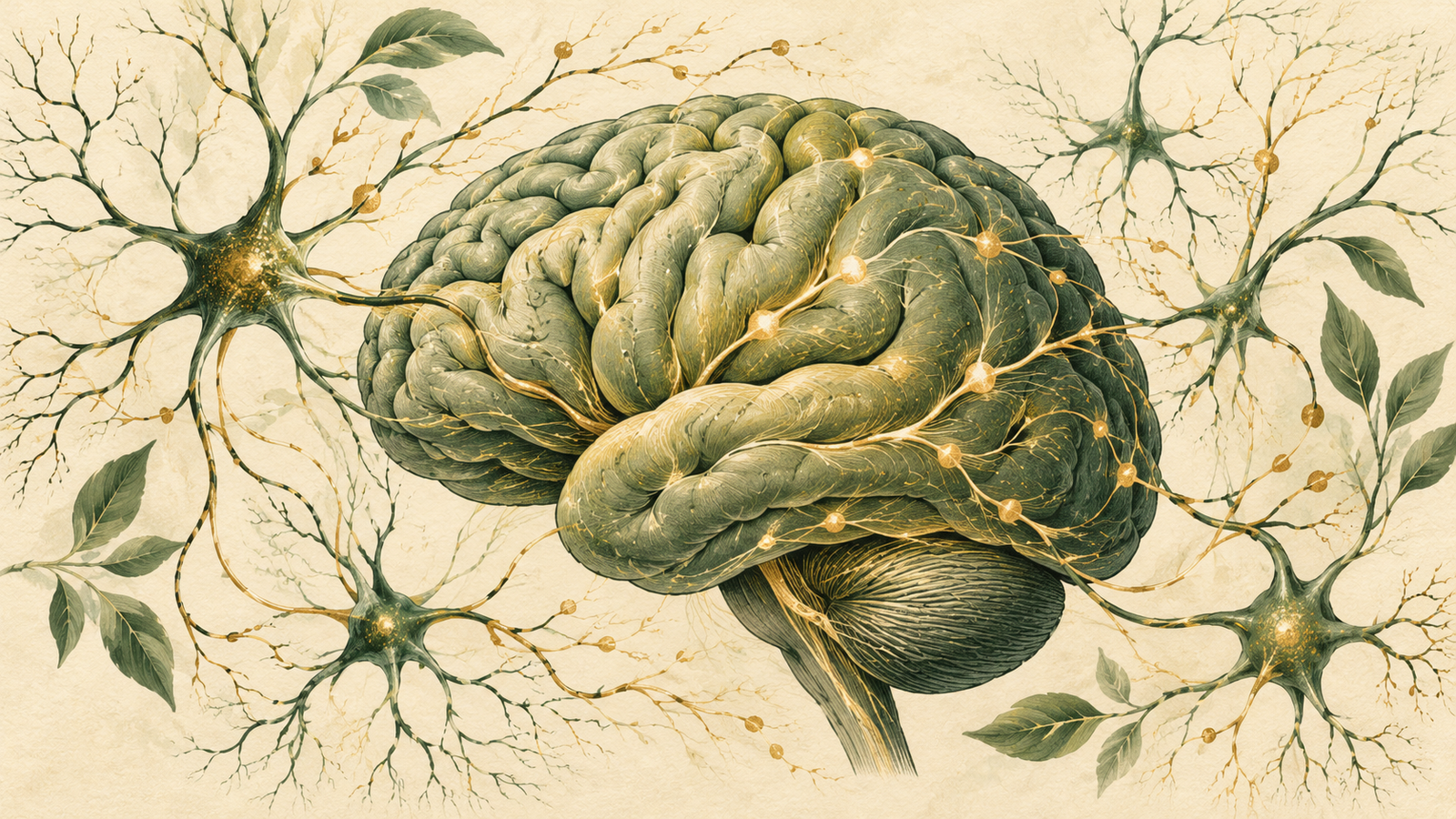
Neuroplasticity is the nervous system’s capacity to change its organization or functioning. Experience and learning can contribute to these changes, including changes in the strength of communication between neurons.
Research on learning and memory has shown that experiences can modify synaptic connections. Synapses are the points at which neurons communicate. Some changes involve how effectively existing connections transmit signals; longer-lasting forms of memory can also involve structural changes.
This provides a biological perspective on how experience can have lasting effects. However, neuroplasticity is a broad property of the nervous system. It does not establish that a particular intervention will be effective, appropriate, or beneficial for every person.
Reinforcement: A Connection Between Behavior and Biology
In behavior analysis, reinforcement is identified by its effect: a consequence increases the future likelihood of the behavior it follows under relevant conditions.
For example, imagine that a learner asks for clarification and receives useful guidance. If asking for clarification becomes more likely in similar situations, the consequence has functioned as reinforcement.
Neuroscience contributes a different perspective by investigating systems involved in learning from outcomes. Research has identified dopamine neuron activity associated with differences between expected and received rewards, often called reward prediction errors.
These findings help explain aspects of reward-related learning. They do not make dopamine a direct substitute for the behavioral definition of reinforcement. In practice, an analyst still needs to measure whether the relevant behavior increases.
A Practical Example: Learning to Ask for Help
Consider a hypothetical student who finds independent assignments difficult and rarely asks for assistance. The student and teaching team identify a useful goal: requesting clarification when instructions are unclear.
A behavior analyst could help the team:
- Observe the situations in which assistance is needed.
- Select an accessible way for the student to request help.
- Provide opportunities to practice with appropriate support.
- Respond to requests with useful guidance.
- Track independent requests and check whether the skill is used across activities.
If requests increase, the behavioral data document a change in performance. A well-designed evaluation can help determine whether the teaching approach contributed to that change.
The learning process also involves the nervous system. Identifying its specific neural mechanisms, however, would require additional research and biological measurements. The classroom example alone cannot establish them.
What Does This Mean for ABA Professionals?
1. Keep Outcomes Meaningful
Learning goals should connect to the person’s needs, preferences, and daily activities. Requesting assistance, communicating a choice, or completing a valued routine provides a concrete outcome to evaluate.
2. Measure What the Evidence Can Show
Behavioral data can show changes in frequency, accuracy, independence, or duration. Claims about brain structure or neural activity require measurements that address those questions directly.
3. Plan for Everyday Use
When evaluating a new skill, ask whether it remains available over time and with different people, materials, or settings. Success during one teaching session is only part of the picture.
4. Read Across Disciplines Carefully
When reviewing neuroscience research, consider who or what was studied, which task was used, and what was measured. A laboratory finding can inform further questions without immediately providing instructions for an individual intervention.
Does Neuroscience Prove That an ABA Program Works?
Evidence that learning involves neural change supports a biological understanding of learning. It does not validate every procedure described as ABA.
A particular program still needs evidence relevant to its goals, methods, and participants. Useful questions include: did the targeted skills improve, did the changes matter to the person, were there unwanted effects, and did progress continue beyond the teaching setting?
This distinction helps professionals evaluate both behavioral and neuroscience claims without promising outcomes that the available evidence cannot establish.
Frequently Asked Questions
Does ABA ignore the brain?
No. Behavior analysis recognizes that behavior involves biological processes. Its primary focus is on functional relations between behavior and the environment. Neuroscience investigates biological mechanisms that can complement this work.
Does ABA change the brain?
Learning involves the nervous system, and experience can produce neural changes. However, improvement during an ABA program does not by itself identify a specific brain change. Such a claim requires direct evidence.
Are reinforcement and dopamine the same thing?
No. Reinforcement describes a functional relation identified through changes in behavior. Dopamine is a neurotransmitter involved in several processes, including aspects of reward-related learning.
Deepen Your Understanding of Learning and Behavior
Studying the relationship between ABA and neuroscience encourages precise questions about how people learn and how progress should be evaluated.
Explore Greenfort University’s Master of Science in Applied Behavior Analysis and certification preparatory programs to develop your knowledge of behavioral science, research, and professional practice.